
Cross-Cultural Literary Dialogue at Warsaw Book Fair
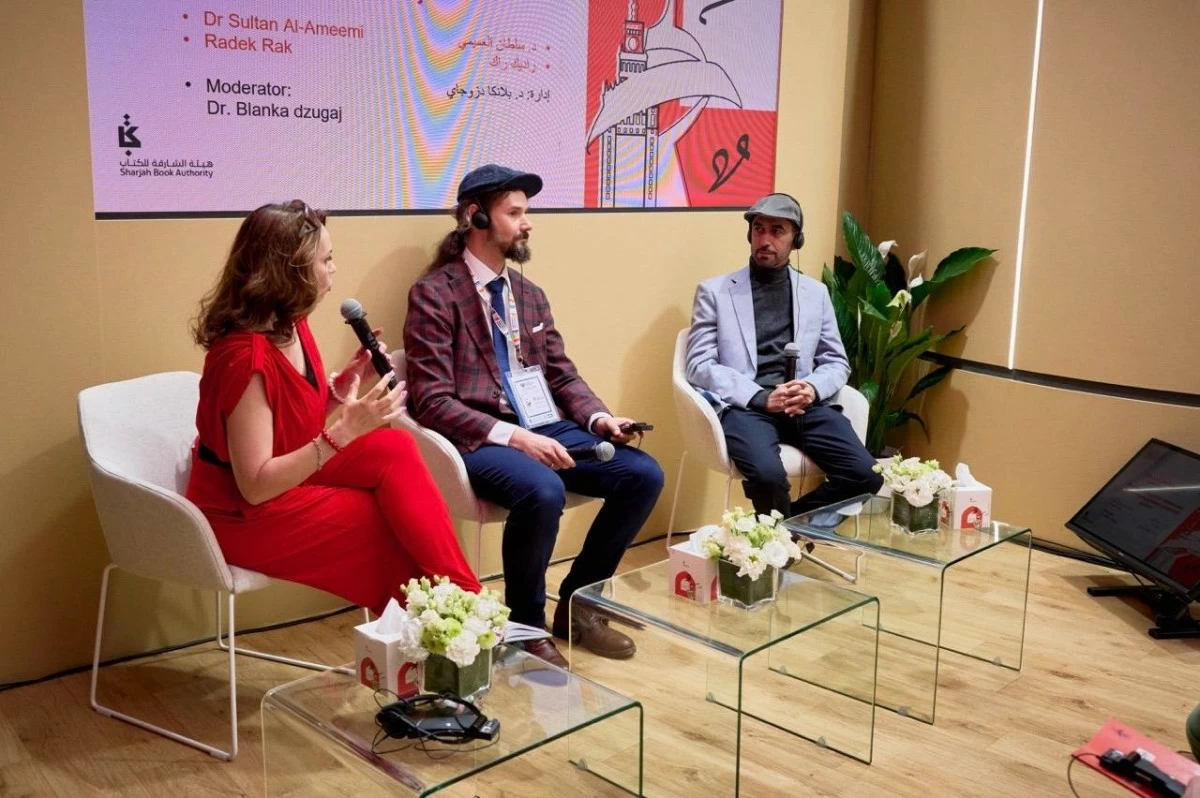
During the Warsaw International Book Fair 2026, a significant dialogue unfolded at Sharjah’s pavilion, bringing together Emirati writer and researcher Dr. Sultan Al Ameemi and Polish novelist Radek Rak. The session, a highlight of Sharjah’s Guest of Honour program, centered on how literature transcends linguistic and cultural barriers, exploring the future trajectory of contemporary fiction, the critical role of translation, and the intricate relationship connecting authors, readers, and established literary traditions.
Contemporary Trends and Translation’s Impact
Titled “Artistic and intellectual developments in contemporary Emirati and Polish literature,” the discussion saw Dr. Al Ameemi highlight the increasing translation of Arabic literature into other languages as a key factor in fostering literary exchange and broadening inter-cultural dialogue. He observed that modern fiction frequently tackles universal concerns shared by societies globally, irrespective of geographic location or language. Dr. Al Ameemi also pointed out the recurring similarities in themes found in folk traditions across both Eastern and Western cultures, where narratives often converge despite distinct cultural origins.
Evolution of Emirati Fiction and Creative Vision
Reflecting on the progression of the Emirati novel, Dr. Al Ameemi noted a growing openness to linguistic, structural, and conceptual experimentation within contemporary Emirati fiction. He emphasized that genuine literary advancement stems primarily from an author’s individual creative vision, rather than solely from institutional support or cultural environments. While acknowledging the supportive role of literary prizes and competitions in recognizing achievement, he asserted that they do not inherently create novelists. Instead, he argued, enduring literary value is forged through a sustained dedication to craft and the cultivation of a unique creative voice.
Writer-Reader Dynamics and Language Considerations
Addressing the relationship between authors and their audience, Dr. Al Ameemi stated that writers do not create in isolation, yet he cautioned against allowing excessive concern for audience expectations to compromise a work’s integrity. He posited that readers bring varied perspectives to a text over time, leading to different interpretations even by the same individual at various life stages. He stressed that anxieties about translation or international readership should not influence the writing process, underscoring an author’s fundamental responsibility to the text itself, its language, and its artistic construction.
Regarding language, Dr. Al Ameemi affirmed Standard Arabic as the unifying literary language of the Arab world, enabling readers across diverse countries to engage with a shared literary heritage. He mentioned that while the use of dialects in prose remains limited, Emirati poetry continues to thrive in both classical Arabic and Nabati forms.
Cultural Specificity and Universal Resonance
From the Polish perspective, Radek Rak underscored that literature gains strength from balancing cultural specificity with universal human experiences. He referenced Umberto Eco’s The Name of the Rose as an example of a work deeply embedded in a particular historical context yet resonating across cultures and generations. Rak explained that cultural specificity imbues literature with its unique identity, while universal themes enable readers to connect with stories beyond their personal experiences, fostering both familiarity and discovery.
Drawing on examples from Polish and Finnish literature, Rak articulated that a translator’s role extends beyond mere word transfer to effectively conveying the cultural and linguistic essence of a text. On the craft of fiction, Rak stated that novels are shaped not only by their plot but also by the writer’s perspective and interpretation of the world. He concluded that while storytelling remains crucial, the most impactful books are those that leave a lasting impression and offer profound insights into lives and experiences distinct from the reader’s own.
Source: Emirati and Polish authors discuss future of the novel at Warsaw International Book Fair 2026